Aphids - Can't live with 'em, Can't live without 'em!
Honesty First and Last
I completely jacked this article from HERE and they completely deserve your click. It is very well researched and sourced. I cleaned it up a bit and then added my experience.
Remove what you can, don't kill everything you see:
After doing week of research myself, I am recommending to you, when you encounter aphids on your plants, first step it to accurately identify that is what you have. This is a link to a UC Davis document shows photos of different aphid species. Secondly, remove what you can of the infested leaves and stems and discard more than 5 feet away from any plants you do not want infected. Ya know that noisy neighbor whos dog always leaves you a gift between your front door and car. He would love some aphid infected 'clippings' for his garden. The main point of this is, by removing what you can, and not killing what you see, you enhance the beneficials life cycle. And you might make a friend, although doubtful.
- Plants can survive an aphid attack without you. If you see a few aphids your plant is not doomed. Healthy crops can fight off the damage. There are beneficials that thrive on aphids. Lacewings, syrphid flies and lady beetles have babies and those larvae love to nurse on aphids. Larvae consume 20 aphids a day. Grown lady beetle can eat more than 50!
- Most aphids can’t fly and are terrible climbers. The majority of aphids in a colony do not have wings. The wingless spend their entire life cycle basically in place. If they get knocked off they won’t be able to get back to the plant. If you use a strong spray of water and send them to the ground, they will most likely starve to death. A small percentage of the aphid population will grow wings. The force of the stream of water will damage them too.
- Releasing lady beetles near an infestation will not work. Lady beetles, aka “lady bugs” are your friends in the garden but they are not Seal Team Six. Studies show that the natural predators in a garden have a hard time catching up to the growth of aphids. If you’re going to take a chance on store-packaged lady bugs, first water the garden at dusk and then let go of the batch.
- All aphids are capable of carrying plant viruses. It takes one infected aphid to make a plant sick. The virus stunts growth and hinders flower and fruit production. Instead of trying to kill every aphid, a more realistic approach is to weigh the damage and the risks involved in keeping the aphid around. Certain crops like squash, cucumbers, pumpkins, melons, beans, potatoes, lettuce, beets, chard and bok choy are more prone to aphid viruses. A decision needs to be made if the plant shows severe signs of damage. It might be best to destroy the plant. Some real advanced gardeners keep a few plants around that expected to be infested and then control or eliminate on other sensitive plants. What brilliance huh?
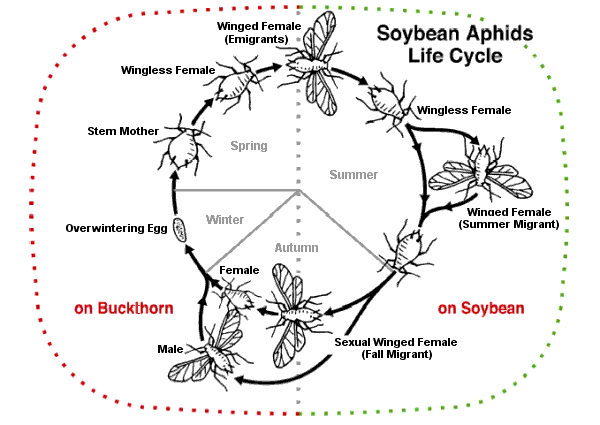
- Prevention is not always the best medicine. Another important tip to consider is that early spraying of natural or synthetic chemicals to ward off aphid attacks might actually encourage aphid outbreaks because natural predators are killed off before they’re needed the most. The life cycles go like this: predators eggs are laid. Aphid larvae are laid. Predators are born and seek food. In a perfect world, most of the aphids are eaten, leaving some to live on and propogate to feed the next generation of predator.
- There is an aphid season. Many species of aphids cause the greatest damage in late spring when temperatures are warm but not hot (65°-80°F). One aphid can produce a hundred or more aphids in 4 weeks. The are most active in from now thru July. In colder months they might still be around lurking in perennial bushes or weeds. Once I learned this I looked closer at my shrubs and sure enough I spotted aphids in the shaded, overgrown areas.
- If ants are present, your aphids have survival insurance. Ants and aphids act like a team. The aphids get protection from predators and the ants gather the honeydew produced by the aphids. Ants stimulate or tickle the bellies of aphids to get them to excrete the sweet treat. The honeydew that is being farmed by the ants might mold on your plant and this is the black sooty fungus you see near aphid colonies. The mold does not do as much damage. Studies show that ants not only protect the aphids from ladybugs, parasitic wasps and lacewings, but they also make it possible to have bigger and longer lasting colonies with higher reproduction rates. Control ants.
- Counting aphids could put you to sleep. Farmers conduct sampling to determine if insecticides are needed to treat aphid infestations. The home gardener can use the same approach to identify the mildest and most effective method of pest control. The University of Minnesota Entomology Department created a worksheet for “speed scouting” for aphids on soybean crops. If a plant has less than 40 aphids it was considered not to be infested. In your garden, you may want to use a similar approach. You can always check again in 3-5 days to see if numbers are increasing. If they are not increasing and your plants are healthy, it’s better to let nature take its course. If you worry too much and insist on doing something, water and milk have been reported to reduce aphid populations by dislodging and suffocating them.

- Natural, organic and homemade deterrents and pesticides can harm beneficial insects. Insecticidal soaps kill soft bodied insects by drying out the skin of an insect. However, since the larvae of the lacewing, syrpid fly and lady beetle are soft bodied, these treatments affect our friends in the garden. Pepper spray and the capsaicin in it, is toxic and lethal to honey bees. Garlic, pepper and onions plants are natural repellents to aphids. Although neem oil and horticultural oils are options that can kill beneficial insects alongside the aphids, these oils won’t kill new insects that fly in after the application.
- The Best Natural Killer of Aphids: Water that knocks them off the plants and milk that protects leaves from infection are the cheapest, most effective methods. Maybe it seems too good to be true but knowing what we know now, it makes sense. Water can be used from a hose or spray bottle with just enough pressure to dislodge the insect, sending it to the ground. Aphids, as stated above, are not strong enough to find their way back. Another option is milk. Leaves coated with a milk spray may be less vulnerable to damage and the transmission of aphid-borne viruses. These recommendations are less about preventing an aphid infestation and more about addressing an existing outbreak. A strong water spray or milk application may be just enough to set your garden back on track.
Examine the life cycle of all involved. If plant virus delivered from an aphid killed every plant, thus reducing the food source for the aphid, it kills its self off. Nature does not do that.


No comments:
Post a Comment